loam
loam
Eat more fiber.
Grow a richer gut.
loam is a calm fiber tracker that makes the most overlooked number in your diet finally visible — and helps you eat 30 plants a week for a more diverse gut microbiome. One plate at a time.
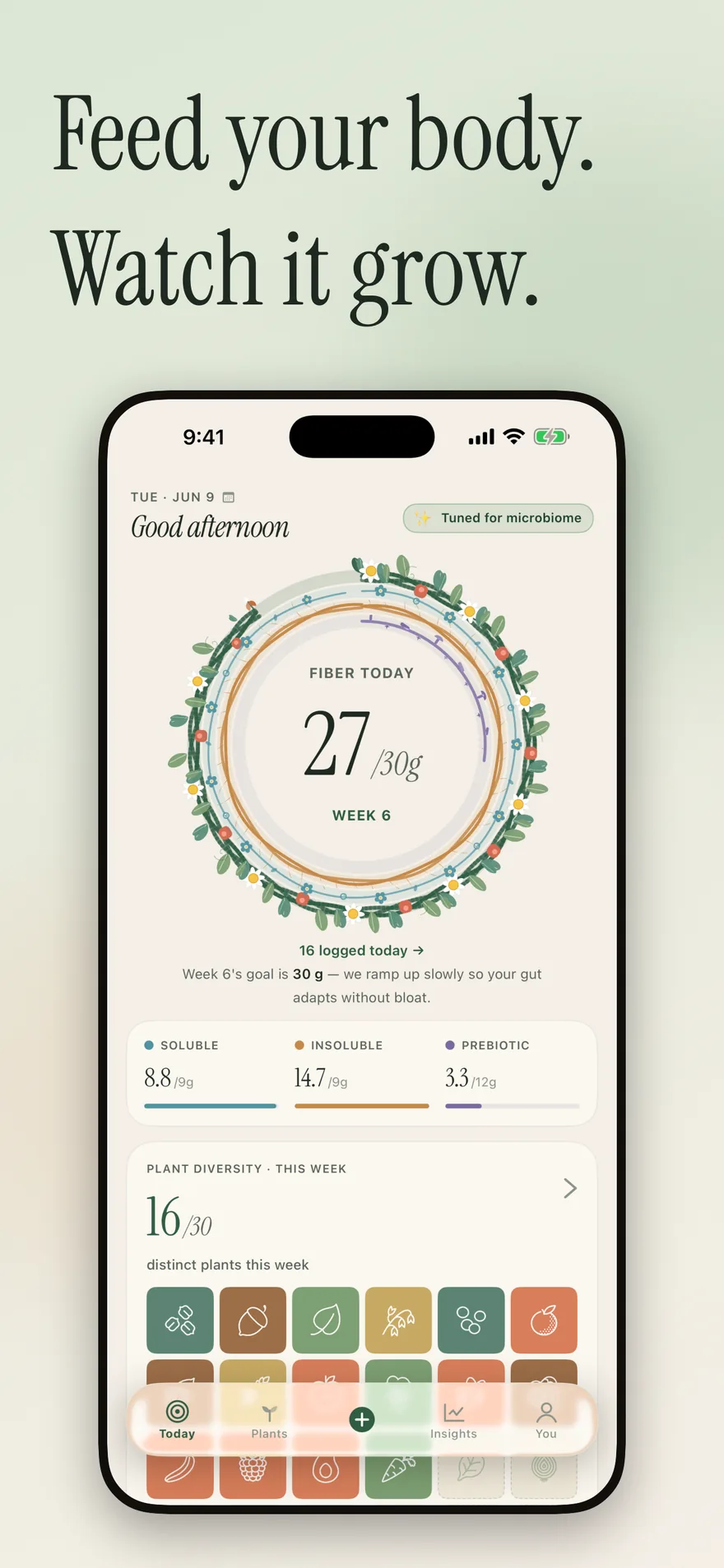
Fiber adults are advised to eat daily — yet most only reach about 16 g. loam closes that gap.
Different plants a week is the diversity target linked to a richer gut microbiome. loam counts them for you.
Foods you can log — a curated whole-food core with per-portion fiber, a soluble/insoluble/prebiotic split and FODMAP labels, plus searchable USDA data.
The fiber number, finally made visible
Fiber may be the single most overlooked number in everyday nutrition. loam surfaces it calmly — and turns it into a habit you can actually keep.
See soluble, insoluble & prebiotic at a glance
Every fiber type does a different job. Soluble fiber feeds your microbes, insoluble keeps you regular, and prebiotic fiber directly fuels beneficial bacteria. loam splits your day into all three, so you can see exactly which one you're missing.
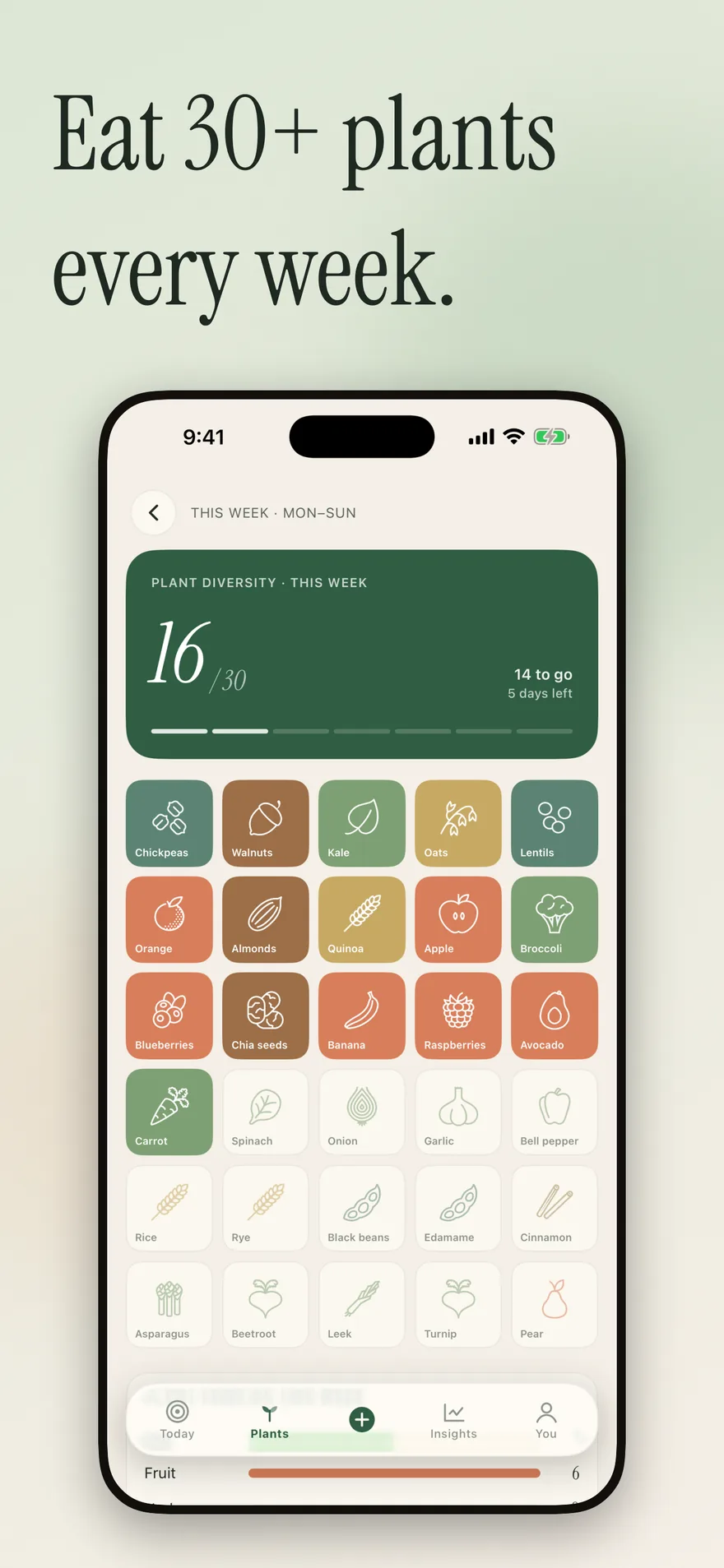
Eat 30 plants a week — variety made countable
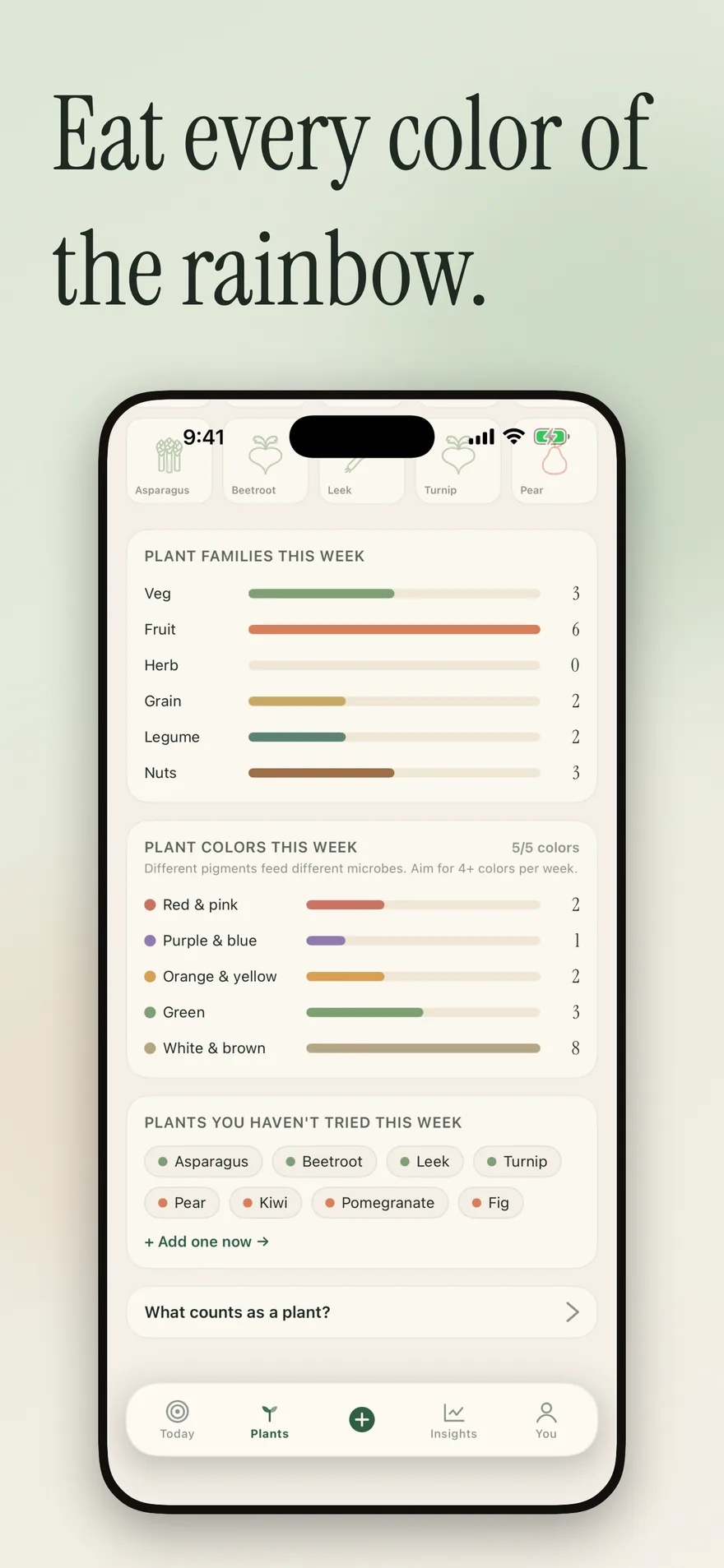
The 30-plants habit comes from real microbiome research: more distinct plants means a more diverse gut. loam counts every unique plant — fruit, vegetables, legumes, whole grains, nuts, seeds, herbs and spices — and nudges you toward the ones you haven't tried yet.
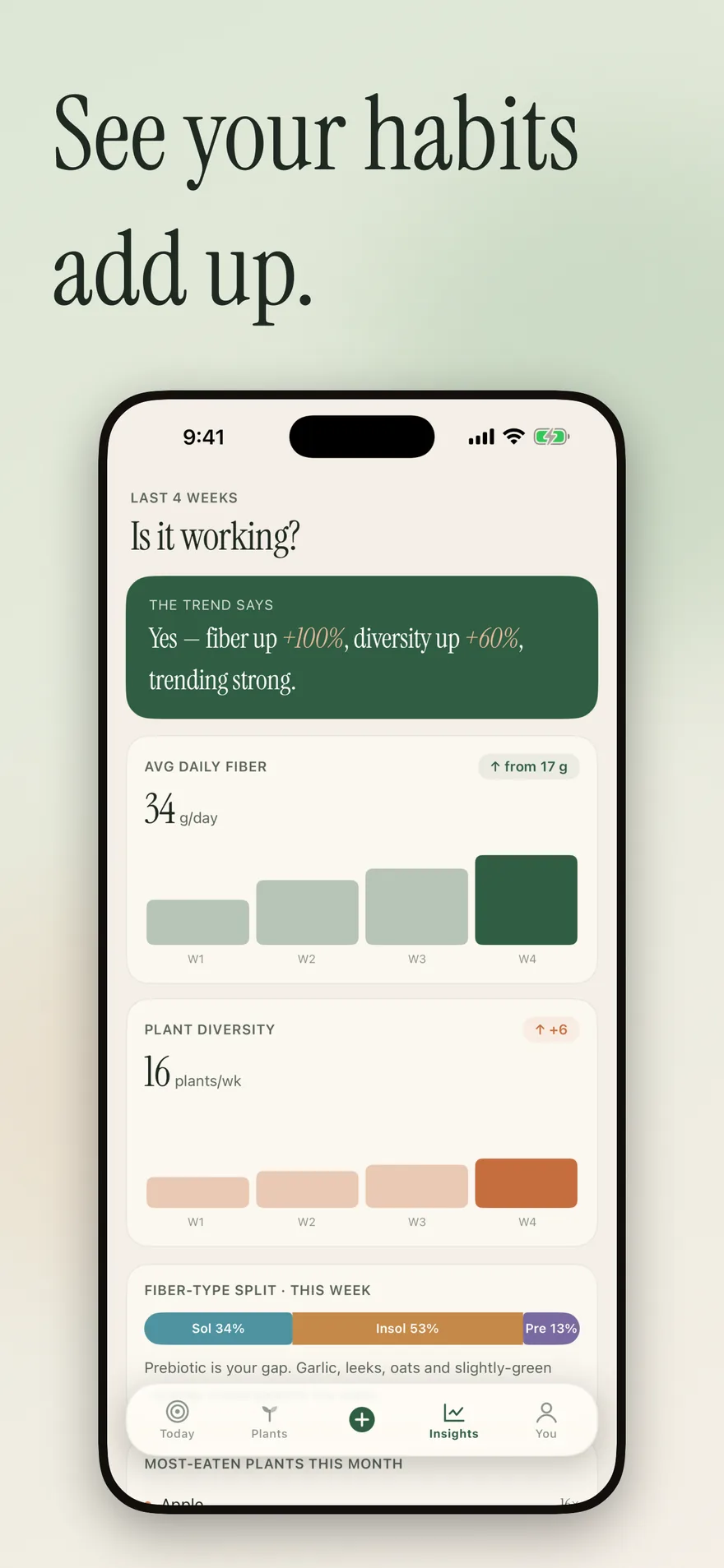
Watch small habits add up
loam turns your recent weeks into clear charts — average daily fiber, plant diversity, and your soluble/insoluble/prebiotic split — so progress is something you can see, not just hope for. No streaks to break, no guilt when life happens.
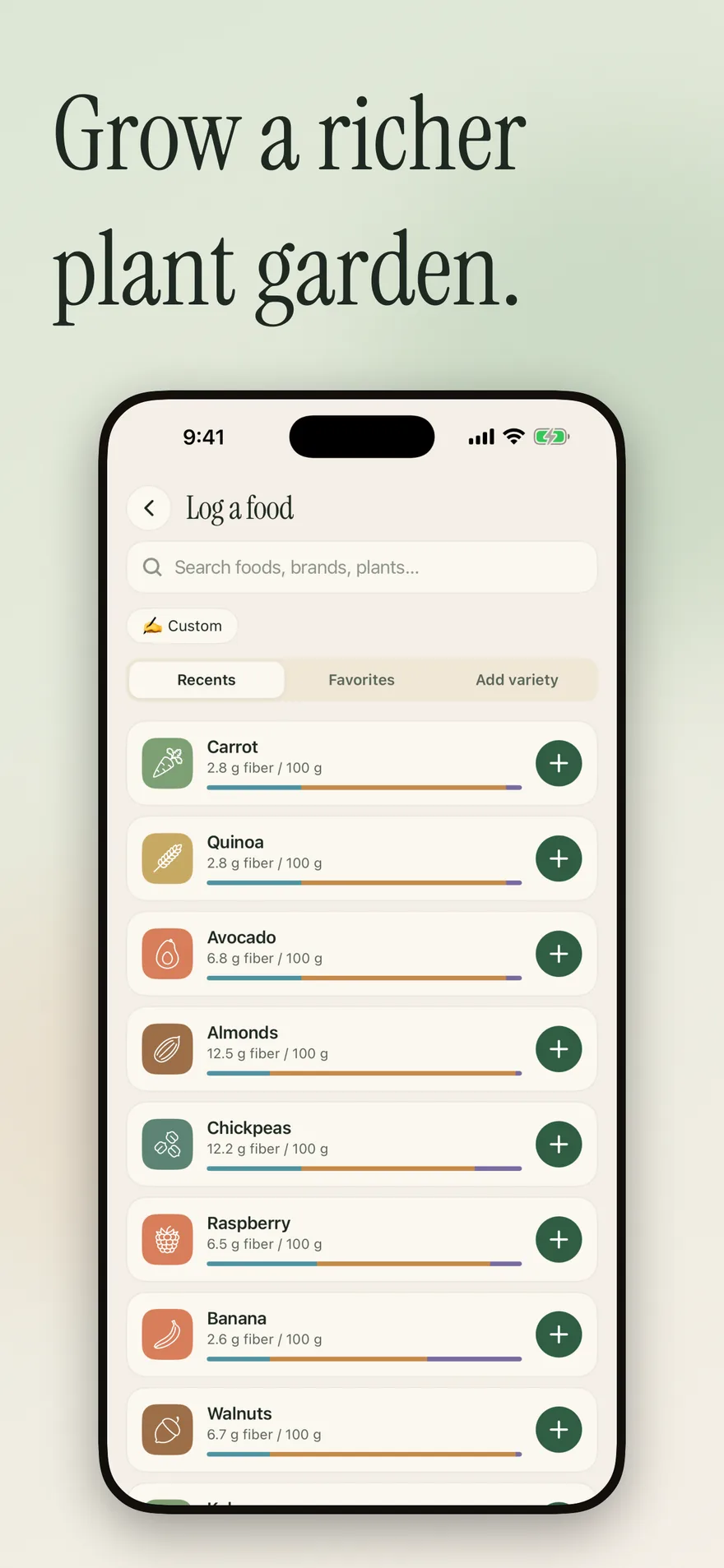
Raise fiber the IBS-friendly way
Many high-fiber staples are also high-FODMAP — that's why "eat more fiber" backfires for sensitive guts. Every catalog food in loam carries a low / moderate / high FODMAP label, so you can push fiber up while choosing gentler plants. Supports general wellness; not medical advice.
Calm on the surface, thorough underneath
Designed to feel like a quiet garden — not another demanding health app.
Three steps, then let it grow
No calorie counting, no perfect diet required — just a small habit that sticks.
Log in seconds
Add meals from a curated catalog of 184 whole foods — each with per-portion fiber — or quick-add your own. Search foods, brands and plants as you go.
Follow a goal that grows
loam sets a personal daily fiber goal grounded in IOM and WHO reference values, then ramps it up gently — so you never jump to 30 g overnight and end up bloated.
Watch it add up
Hit 30 plants a week, balance your fiber types, and see the trend line climb. Progress you can see beats motivation you have to summon.
Learn the science, then put it on your plate
Short, practical guides to the questions people actually ask about fiber and gut health — each ending with how to do it in loam.
How much fiber per day?
The real numbers for women and men, why most people fall short, and how to close the gap without a spreadsheet.
Read guide → Gut health30 plants a week, explained
Where the number comes from, what counts as a plant, and an easy way to actually hit 30 every week.
Read guide → Gut healthGut microbiome diet
How food shapes your microbiome — and the handful of habits that move the needle most.
Read guide → Food listsHigh-fiber foods list
A practical table of high-fiber whole foods with grams per 100 g — and which fiber type each brings.
Read guide → Fiber basicsSoluble vs. insoluble fiber
What each type does, where to find it, and why balancing both keeps digestion smooth.
Read guide → Gut healthPrebiotic fiber & inulin
The fiber that directly feeds good bacteria — top food sources and how much you need.
Read guide → PracticalIncrease fiber without bloating
Why fiber can cause gas — and the gentle ramp-up that lets your gut adapt comfortably.
Read guide → IBS & FODMAPLow-FODMAP and fiber
How to raise fiber while keeping FODMAPs in check, with low-FODMAP high-fiber picks.
Read guide →Fiber, plants & loam — answered
How much fiber should I eat per day?
Common guidance is about 25 g/day for women and 38 g/day for men (roughly 14 g per 1,000 calories). The catch: most people only get around 16 g. loam gives you a personal daily target and ramps it up slowly so your gut adapts comfortably.
Learn more: How much fiber per day →What does "eat 30 plants a week" actually mean?
It's a diversity habit from the 2018 American Gut Project, popularised by ZOE's Prof. Tim Spector: people who ate 30+ different plants a week had a more diverse gut microbiome than those eating fewer than 10. loam counts your distinct plants across fruit, veg, legumes, grains, nuts, seeds, herbs and spices.
Learn more: 30 plants a week →What's the difference between soluble and insoluble fiber?
Soluble fiber dissolves in water and feeds gut bacteria; insoluble fiber adds bulk and keeps you regular. Prebiotic fiber is a special subset that directly fuels beneficial microbes. loam shows all three types so you can spot your gap at a glance.
Learn more: Soluble vs. insoluble fiber →Can I increase fiber without getting bloated?
Yes — the trick is to add fiber gradually and drink more water as you go. loam's goal ramps up week by week instead of dropping you at 30 g overnight, which is exactly how you avoid the gas and bloating.
Learn more: Increase fiber without bloating →Does loam work for a low-FODMAP diet?
Catalog foods carry low / moderate / high FODMAP labels, so you can raise fiber while staying mindful of FODMAPs — helpful if you're managing IBS. loam supports general wellness and isn't medical advice.
Learn more: Low-FODMAP and fiber →Is loam free, and where is my data?
loam is free to download, with no ads and no account. Core fiber and plant tracking is free. Optional loam Premium (fiber-type breakdown, unlimited history, unlimited custom foods) is a subscription with a 14-day free trial. Your data stays in your private iCloud — the developer never sees it.
Learn more: Download loam →Which devices and languages does loam support?
loam runs on iPhone (iOS 26.5 and later), can optionally write your logged fiber to Apple Health, and is available in 40+ languages, hand-tuned by native speakers rather than machine translation.
Learn more: Explore the features →Your future self is built one plate at a time
Start closing your fiber gap today — calmly, privately, free to start.